Hope Needs Honesty
A Prime Minister’s apology and a football club’s verdict landed on the same day. Neither was about church. Both were about trust — and trust is the currency our mission runs on.
Two stories dominated Tuesday 29 September, and they’ve been sitting with me since.
The Prime Minister, Andy Burnham, told his party conference he wasn’t going to give the usual tub-thumping speech, then named the failures of his own generation of politicians, himself included. Hours earlier, an independent commission found Manchester City guilty of serious breaches of Premier League financial rules over nine seasons, 2009 to 2018, and of most of the charges about not co-operating with the investigation.1 City deny it and will appeal; no punishment has been decided.
You’ll have your own views on the politics and the football. I’m not endorsing a party, and if you’re a City fan, this isn’t aimed at you. It’s aimed at all of us who are the church.
Trust is lent, not owned
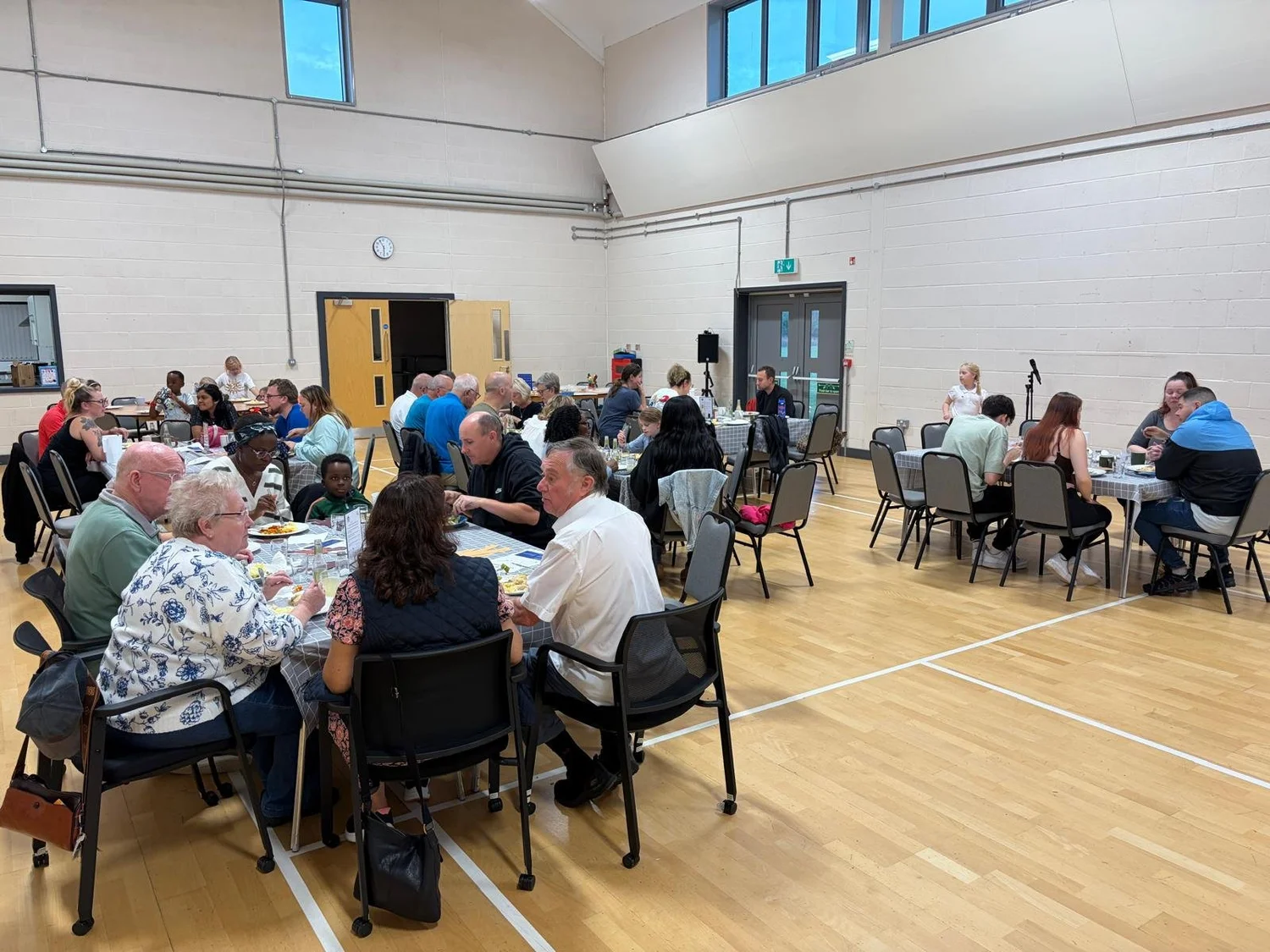
In Marston Moretaine, a mum brings her kids to The Table, our free community meal, because she believes there’s no catch. Someone at the pub argues with me about God at Doubts & Drinks because they believe they won’t be judged for it. A head teacher lets us into assembly every week because they trust what we’ll say to 150 children.
None of that is owed to us. It’s lent, and it can be withdrawn in a moment. ‘Belong before believing’ only works if the belonging is honest. If a church is one thing on a Sunday and another in its finances, its meetings or how it treats people who disagree, the village finds out. Villages always do.
Winning isn’t the same as being right
The commission wasn’t asked whether City played beautiful football. It was asked whether the numbers were true. That’s the question for every church too, ours included. Full rooms and good figures in the annual report can all be real, and none of it proves the culture underneath is honest. Can people ask hard questions? Are the meetings minuted? Would the accounts survive a close look?
A large part of the finding was about a refusal to co-operate with the people asking questions from outside. In church life that looks like the leader who bristles when the treasurer asks something, or the concern that gets ‘handled quietly’. Refusing scrutiny is never a side issue.
The church didn’t need football to teach us this. Ananias and Sapphira didn’t lie to an auditor. Peter’s charge was that they had lied ‘to the Holy Spirit’ (Acts 5:3). Dishonesty in the body of Christ isn’t merely a governance failure. It’s a sin against God.
‘Whoever conceals their sins does not prosper, but the one who confesses and renounces them finds mercy.’ — Proverbs 28:13
What Albania taught us about trust
Annie and I learned most of this somewhere else. In Tunisia, being watched was part of daily life. In Albania, we arrived in a country where half a century of communism had taught people that institutions lie and religion is a cover for something else. Trust wasn’t just scarce. It had been deliberately destroyed.
So at Tek Ura, how we work has always been the message. There’s a man in Tirana who first came through our doors because his daughter needed physiotherapy. He had seen enough of religion used as cover. Four years of being treated honestly — no catch, no hidden agenda — is what opened him up. He now leads prayer in our church there.
Set this week’s headlines beside one number. In 2024, Tek Ura’s Recovery programme helped 32 people into legal, contracted employment.2 On one side of Europe, a football club is found to have relied on ‘sham’ contracts to look richer than it was. On the other, a small church-rooted charity is helping people get real contracts, so they can pay tax, see a doctor and stop being invisible. And both our centres have Residents Advisory Councils: local people, not staff, with a genuine say in what happens.
Albania also taught us that owning a failure in public costs different amounts in different places. In a culture of honour and shame, a public apology can shame a whole family, not just the person making it. British ways of confessing aren’t the only Christian ones. Some of the most honest people I know have said sorry privately, carefully and at great cost. Mission goes both ways, and on this the Albanian church has taught me more than I’ve taught it.
Saying the thing people avoid
The moment in Burnham’s speech that stopped me was when he turned to care workers, said “I see you” and apologised on behalf of his whole profession for letting theirs down for so long.3 Not everything in the speech was welcomed — his plans for pensions and his verdict on Brexit will be argued over for months — but that moment was confession on behalf of a group.
Scripture has a whole tradition of it. Nehemiah confesses the sins of Israel, ‘including myself and my father’s family’ (Nehemiah 1:6), before a single stone of the wall is laid. Daniel prays the same way. There’s a difference, of course: Nehemiah and Daniel confess to God, and Burnham apologised to people. But they belong together. Honesty before God that never reaches the people we’ve let down isn’t much honesty at all.
Baptists have done this too, notably in the Baptist Union’s 2007 apology for our part in the transatlantic slave trade.4 But we’ve done it rarely, late, and usually when pressed. We’d rather talk about decline as if it were weather than say, together, ‘we got this wrong’.
An apology isn’t yet repentance
And here the church has something to say back to the Prime Minister. A good apology is a start, not a finish. Bonhoeffer warned against ‘cheap grace’: forgiveness claimed without any change of life. The New Testament word for repentance, metanoia, means turning round. John the Baptist told the crowds to ‘produce fruit in keeping with repentance’ (Luke 3:8).
That test applies to Burnham: care workers will judge his apology by what happens to their pay and conditions. And it applies to us. A church that says sorry and changes nothing has made a speech, not a confession.
The Baptist answer to power in too few hands
Baptists don’t hand authority upwards. We have the church meeting: the congregation gathered under Christ, seeking his mind together. And we belong to one another, in associations and in a Union, because no church discerns well alone. It’s an ecclesial cousin of the devolution a Prime Minister was promising this week, and it’s about four centuries older.
The question is whether we still practise it. I’ve had to ask myself, as a minister, whether our church meeting is a place where people can genuinely disagree with me, and whether I’d notice if it had quietly become a rubber stamp.
We were born as dissenters. Thomas Helwys’s A Short Declaration of the Mystery of Iniquity (1612), the first English plea for full religious liberty, was addressed to King James himself. It told him the king is a mortal man and not God, and argued that liberty of conscience belonged to everyone — even those the age called heretics, Jews and Muslims. Helwys was in Newgate within a year and dead by 1616.5 So Baptists know how to receive a true word from a ruler without bowing to him.
What restoration is — and isn’t
Restoration isn’t forgetting. And it isn’t protecting a church’s reputation while the people who were hurt are told to ‘move on’. That’s cover, and the people it covers are never the ones who were harmed.
Real restoration starts with grace, not effort. Zacchaeus pledges to pay back four times what he took, but only after Jesus has invited himself to dinner (Luke 19:5–8). Peter is restored not by proving himself but by Jesus asking him three times, “Do you love me?” (John 21). Grace first. Then confession, repair, counsel and rebuilding, in that order. Paul tells us to ‘restore that person gently’ (Galatians 6:1), and gentle doesn’t mean quiet.
Where hope actually comes from
Burnham said hope comes from honesty. True as far as it goes. Our hope comes from God’s faithfulness, ‘a living hope through the resurrection of Jesus Christ from the dead’ (1 Peter 1:3). Honesty is the open hand that receives it: ‘If we confess our sins, he is faithful and just and will forgive us our sins’ (1 John 1:9).
That’s why the church can afford to be honest when institutions built on reputation can’t. We’ve nothing to lose that hasn’t already been carried. And it’s God’s kindness, Paul says, that leads us to repentance (Romans 2:4) — not fear of being found out.
Practising what we preach
So what does that mean for us at Vale? This year we became a charitable incorporated organisation (Charity Number 1217399), and we’re working through the transfer from the old charity with legal advice. As a CIO, our annual accounts will be published on the Charity Commission’s public register, where anyone can read them. Our safeguarding policy is already on this website. If you’re part of Vale and something prompts a question, ask it. That’s the point.
And to any church reading this, gently: is your safeguarding policy somewhere people can actually find it? Would your accounts survive a close look? When did your church meeting last change its mind?
A prayer
Faithful God, you know the whole truth about us and love us still. Forgive us where we have hidden what should have been brought into the light, protected our name ahead of your people, or kept quiet when we should have spoken. Give us the courage to confess, the humility to be questioned, and the grace to make things right. Make our churches places the weary can trust, because they have found you trustworthy. Through Jesus Christ, who is the truth and our living hope. Amen.
Then “we will hope again” won’t be a slogan. It’ll be true.
The best is yet to come.
Dan Dupree
Pioneer minister, Vale Community Church. Marston Moretaine and Tirana.
Notes and sources
1. Premier League statement, 29 September 2026, as reported by NBC News and ESPN. The findings are those of an independent commission and are subject to appeal. The league describes some of the club’s commercial contracts as ‘sham’ arrangements.
2. Qendra Tek Ura, 2024 impact figures. Tek Ura is the Albanian charity Dan and Annie Dupree co-founded in 2016 and lead alongside Vale Community Church; tekura.org.
3. Andy Burnham, speech to the Labour Party Conference, Liverpool, 29 September 2026. Full transcript: The New World.
4. The Council of the Baptist Union of Great Britain made its apology for the transatlantic slave trade in 2007, the bicentenary of the abolition of the British slave trade.
5. Helwys’s Mystery of Iniquity is widely described as the first plea in English for universal religious liberty. He was imprisoned in Newgate soon after it was published and had died by 1616, probably still in prison. ‘Cheap grace’ is from Dietrich Bonhoeffer, The Cost of Discipleship (1937).
Scripture. Quotations are from the NIV. Double quotation marks are used for words spoken aloud; single quotation marks for Scripture, titles and other references.